
Breast Revision Surgery in Bellevue, WA
Over the years, the breast tissue is no longer firm and can literally fall over the implant, called “waterfalling.” The effects of gravity and the loss of ligament support of the breast result in a loss of breast structure. Breast asymmetry may also worsen over time.
Unfortunately, a poorly performed prior surgery by an unskilled surgeon—often not board certified by the American Board of Plastic Surgery (ABPS)—may require extensive surgical correction.
- How Much Does Breast Revision Surgery Cost?
- Why Choose Dr. Stephens for your Revision Surgery?
- What Is Breast Revision Surgery?
- Problems Breast Revision Surgery Addresses
- What Is to be Expected During Breast Implant Revision Surgery?
- How Long Is the Recovery From Breast Revision Surgery?
- FAQs
- Take the guesswork out of Plastic Surgery
How Much Does Breast Revision Surgery Cost?
All breast implant manufacturers have limited lifetime warranties on their breast implants and may cover portions of the revision surgery costs if the breast implants fail. However, this typically does not cover the full expense of the surgery. As each procedure is unique and customized, the fee will be estimated at your consultation. The fee for breast implant revision is typically more expensive than the original augmentation procedure due to the complexity of the procedure.




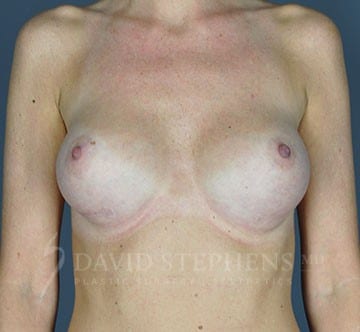
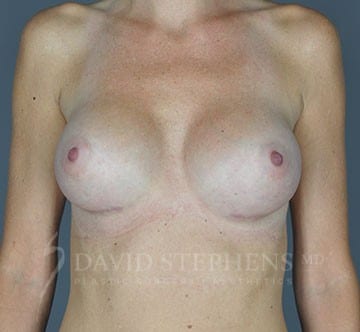
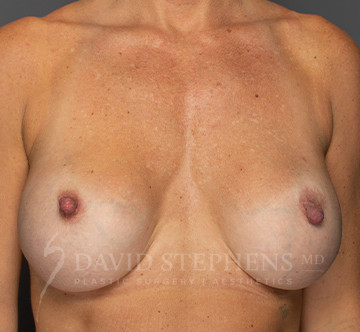
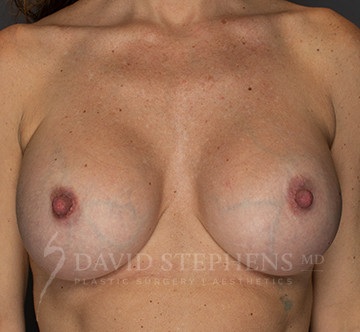
Why Choose Dr. Stephens for your Revision Surgery?
In addition to a painful breast deformity, there is often a degree of emotional distress because of the loss of a woman’s sense of her feminine self and sexual attractiveness.
Breast revision surgery is challenging and technically difficult. It requires experience, artistic vision and expert surgical technique and judgement. Dr. Stephens’ expertise in all aspects of breast surgery and experience with various types of breast deformities give him the unique skills to perform all types of revision procedures to restore a woman’s sense of self. His vision and experience allow him to thoroughly evaluate each person’s specific problem and provide a unique solution.
Correction of problems with breast implants may be straightforward, such as changing the implant size or shape, or it may be very complicated and technically demanding, as in the treatment of a severe capsular contracture with breast distortion. Implant repositioning and changing the placement of the breast pocket may also involve the use of dissolvable mesh, a newer technique, or other biological materials. Fat grafting is an option in some cases.

What Is Breast Revision Surgery?
Breast revision surgery is a corrective procedure performed after a previous breast surgery to address problems such as implant complications, changes in breast shape or position over time, or dissatisfaction with earlier results.
It may involve adjusting or removing implants, repairing the implant pocket, correcting scar tissue, adding a breast lift, or refining contour with fat grafting, depending on each patient’s needs. Because revision surgery is more complex than an initial procedure, it requires careful planning and an experienced, board-certified plastic surgeon to restore natural shape, balance, and support.
Problems Breast Revision Surgery Addresses
Breast revision surgery addresses a variety of concerns relating to the breast and breast implants following the initial procedure.
They are quite common, as a large number of initial breast implant procedures will eventually require some type of revision surgery.
These concerns can be divided into two general categories: 1) problems related to the breast implant(s), or 2) changes in the shape and position of the breasts due to aging, breastfeeding, weight loss, or weight gain.
Breast Implant-Related Issues
Breast revision surgery can address a variety of breast implant-related concerns, including:
- Capsular contracture
- Silicone gel implant rupture
- Saline implant deflation
- Implant malposition, such as implant displacement or bottoming out
- Visible or severe palpable rippling of the breast implant due to thinning out of breast tissue (especially found in above muscle implants)
- Stretch deformity
- Desire to change the size of the breast implants
- Desire to remove the breast implant
- Concerns about Breast Implant Illness (BII), requesting implant removal
Capsular Contracture
Historically, about 15+ percent of all women who undergo breast augmentation suffer from capsular contracture at one time or another. Thankfully, newer techniques and procedures, as well as better breast implants, have reduced this risk to less than two percent in good practices. The exact cause of capsular contracture is not completely understood; however, there is increasingly strong evidence that it results from the body’s response to chronic inflammation, due to slow tightening of the capsule caused by bacterial contamination around the implant.
In Dr. Stephens’ hands, the treatment for capsular contracture requires complete surgical removal of the surrounding tissue that forms the breast capsule around the implant, called total capsulectomy. With the capsule removed, a surgical repair of the breast pocket is necessary to restore the shape of the breast. Dr. Stephens repairs the pocket through the original incision using a special dissolvable mesh called GalaFlex™, made of a slowly dissolving suture material that leaves an extremely strong reinforcing structure around the implant.
Breast Implant Rupture and Deflation
Breast implant rupture and deflation require breast revision surgery and replacement of the implant(s). Breast implant rupture and deflation can occur as a result of the following reasons:
- Implant Age: The most common cause of implant failure is the wear and tear of the implant as it ages. Implants have folds, and ruptures typically occur due to fold failure. The FDA requires breast implants to be studied for the first ten years. Historically, breast implant failure rates in ten years are less than ten percent. However, the new Motiva breast implant has a failure rate of less than one percent.
- Breast Implant Trauma: Excessive squeezing, car and boating accidents or a direct blow to the breast can also result in breast implant rupture. Interestingly, breast implants can withstand a significant force, even with trauma resulting in broken ribs or severe contusions and still stay intact.
- Breast Implant Wear and Tear: Over time, older implants may simply wear out due to continued movement and stresses on the implant shell, creating weak points.
- Over-filling or Under-filling Saline Breast Implants: Not properly filling a saline implant to the manufacturer’s recommended capacity can also lead to premature breast implant failure.
Breast implant rupture of newer breast implants is less common. In most cases, the breast manufacturers may warrant their breast implants for a number of years, but older implants may not be covered. We will discuss whether your breast implants are covered by a breast implant warranty.
Breast Implant Displacement
Displacement of the breast implant usually occurs due to the natural gravity and wear and tear of the breast tissue from the implant’s movement over time. It is more common in women with a more rounded or angled rib cage, where the breasts fall off to the side. Also, some women may have weaker or thinner breast capsular tissue, which may make it more difficult to support the implant. This is a common problem and typically requires a pocket repair called “capsulorrhaphy”. Dr. Stephens often uses GalaFLEX™ reinforcement to ensure that the pocket stays stable around the implant.
Above vs. Below Pectoral Muscle Implants
“Pre-pectoral” (above the muscle) breast implants may have less support in the lower part of the breast because they are not supported by deeper tissue. With loss of connective tissue support within the breast structure and thinning out of the breast tissue, this may result in visible rippling throughout the breast and breast distortion that lacks aesthetic shape and natural breast contour. This may require tissue support with STRATTICE™ Reconstructive Tissue Matrix (RTM) for severe thinning out of the breast tissue and placement of the implant below the muscle.
“Sub-pectoral” (below the muscle) breast implants may fall outward toward the sides of the chest over time due to gravity, implant movement, or weakening of the supporting capsule, resulting in lateral displacement. This typically requires surgical implant pocket repair (capsulorrhaphy), often reinforced with dissolvable mesh or biologic tissue support to restore proper implant position, symmetry, and long-term stability.
Bottoming Out of the Breast Implant
Bottoming out occurs when the inframammary fold tissue separates from the chest wall due to gravity or weak tissue. The implant moves below the natural boundaries of the breast fold, requiring surgical repair to reposition it. Dr. Stephens typically uses dissolvable GalaFLEX™ mesh to reinforce the tissue to support the fold in most cases.
Stretch Deformity
The effect of breast implants on stretching out weaker breast tissue in the lower part of the breast above the breast fold is called a “stretch deformity.” If severe enough, this can be surgically repaired, typically utilizing GalaFLEX™ mesh to reinforce the breast tissue.
Ptosis or Sagging Breast Tissue
In some women, over time, the breast tissue may fall lower over the breast implant, called a “waterfall deformity.” This can also happen without breast implants when, after a previous breast reduction surgery, there is not sufficient breast tissue support. Breast ptosis is due to gravity acting on the weight of the breast tissue, laxity from collagen loss in the supporting breast ligaments, and thinning of the breast skin. Correcting this requires breast revision surgery with a mastopexy/breast lift procedure. GalaFLEX™ mesh may also help stabilize the breast tissue.
Desire for a Change of Appearance or Size of the Breast
Over time, a woman may just want to change the appearance or size of her breasts. Some women may want to be larger than they are or may want to have smaller breasts. This may require modifying the breast implant pocket, in addition to changing the implant size or projection, with a surgical repair or enlargement of the implant pocket.
Desire to Remove Breast Implants
Sometimes a woman may decide to remove the implant altogether. It may be necessary to perform a breast lift called an auto-augmentation mastopexy, utilizing all of the breast tissue to give the breast shape at the same time. Fat grafting may also be performed to improve volume or shape if sufficient donor fat is available.
Change of Breast Appearance
Over time, a woman may just want to change the appearance of her breasts. Some women want to be larger than they are now, or in some cases, they want a breast reduction.
“I never rush surgery – It’s not about treating as many patients as possible in a day. I always take the time and focus needed to provide the best possible end result as well as a more comfortable recovery.”
Dr. Stephens

What Is to be Expected During Breast Implant Revision Surgery?
General anesthesia using a light, fast-recovery technique is administered. For simple revisions, the incision is made in the inframammary area, hidden in the breast fold. More complicated revisions are technically demanding and may require multiple procedures, such as removal of ruptured implants, capsulectomy of the capsular scar tissue of the breast capsule with mesh or other materials, as well as a mastopexy.
How Long Is the Recovery From Breast Revision Surgery?
Breast tissue revision surgery requires several weeks to heal, at a minimum, and up to several months in more complex cases. Mastopexy incisions need to be strong enough before the tissue is stretched too much to risk wound breakdown. New implants with new breast pocket repairs following removal of the breast implant capsule need time to strengthen before heavy chest exercise to gain enough strength to support the breast implant from falling out of the pocket. However, pain and discomfort are typically mild, and immediate graduated increased activity is encouraged.
Patients can usually expect to return to work and their normal activities within a week or two. Complete recovery continues for 6–12 weeks, and a gradual increase in activities is encouraged. You will receive specific instructions in your post-surgical recovery.
FAQs
- Is breast revision surgery painful?
- Does breast revision surgery leave scars?
- Are breast implants covered by a warranty?
- How do I know if I need breast revision surgery?
- How long do breast implants last?
- Can breast revision surgery be combined with a breast lift?
- Will my breasts look more natural after revision surgery?
- Is breast revision surgery more expensive than initial augmentation?
- How many breast revision surgeries can a person have?
- When will I see the final results?
Breast Revision FAQs
-
Is breast revision surgery painful?Breast revision surgery usually is not as traumatic to the woman’s body as the initial breast augmentation surgery was. Therefore, pain and discomfort are considerably less.
-
Does breast revision surgery leave scars?Dr. Stephens usually makes the incision at the original incision site, which is typically in the inframammary area in the breast fold. The resulting scar is easily hidden.
-
Are breast implants covered by a warranty?Breast implant manufacturers like Sientra, Mentor, and Allergan each offer limited lifetime warranties on their breast implants and may cover portions of the revision surgery costs if either breast implant fails. However, you should still expect to pay a portion of the breast revision surgery costs out of pocket.
-
How do I know if I need breast revision surgery?You may be a candidate for breast revision surgery if you notice implant firmness, shifting, asymmetry, visible rippling, sagging over the implant, discomfort, or if your results no longer meet your expectations. Some women seek revision due to implant-related complications, while others do so because their breasts have changed over time. A consultation with Dr. Stephens allows for a careful evaluation and personalized treatment plan.
-
How long do breast implants last?Breast implants are not lifetime devices. While modern implants are designed to be durable, many women will eventually require revision surgery due to normal aging of the implant, changes in breast tissue, or personal preference. Some patients may need revision after 10 to 15 years, while others may go longer without issues.
-
Can breast revision surgery be combined with a breast lift?Yes. Breast revision surgery is often combined with a breast lift when sagging or a waterfall deformity is present. A lift restores the position of the breast tissue and nipple, while the revision addresses implant-related concerns. Combining procedures often results in a more natural and balanced outcome.
-
Will my breasts look more natural after revision surgery?The goal of breast revision surgery is to restore a natural shape, proportion, and feel. This may involve adjusting implant size or position, repairing the implant pocket, reinforcing tissue support, or using fat grafting to refine contour. Each surgical plan is tailored to the patient’s anatomy and goals.
-
Is breast revision surgery more expensive than initial augmentation?In most cases, yes. Breast revision surgery is typically more complex than an initial augmentation and may require advanced techniques such as capsulectomy, pocket reconstruction, or mesh reinforcement. Implant warranties may cover part of the cost in cases of implant failure, but patients should expect some out-of-pocket expense.
-
How many breast revision surgeries can a person have?There is no set limit, but each additional surgery increases complexity due to scar tissue and changes in tissue strength. Careful planning is essential. Dr. Stephens focuses on addressing the underlying cause of the problem to achieve the most stable, long-term result possible.
-
When will I see the final results?Improvement is visible as swelling subsides, but the final results will develop gradually over several months. Healing time varies based on the extent of the revision. Patients are closely followed throughout recovery to ensure proper healing and optimal outcomes.
Take the guesswork out of Plastic Surgery
We are extremely pleased to feature the Vectra XT 3D system in our patient consultations. The results are spectacular and our patients are consistently amazed by the realism of the image!
Patient Testimonials
Dr. Stephens work is absolutely phenomenal. You will not find a better doctor on this side of the Mississippi. He has won multiple awards for a reason. I consider myself so blessed and so fortunate to have had my procedure done by Dr. Stephens.
I always tell people this is the best money I’ve ever spent. I couldn’t be more pleased! I always say picking the best doctor is the most important decision you will ever make, and there’s no one out there better than Dr. David Stephens.
Dr. Stephens took great care in determining what would be done, setting my expectations, and explaining the process. The nurse was kind, helpful, and attentive. The anesthesiologist was wonderful. The whole process was very smooth and painless.
The overall experience was amazing. There was a great amount of communication between the practice and myself leading up to the surgery and the entire surgical staff was an absolute pleasure. You feel comfortable from start to finish.